
“Education is not the learning of facts, but the training of the mind to think.”
~ Albert Einstein
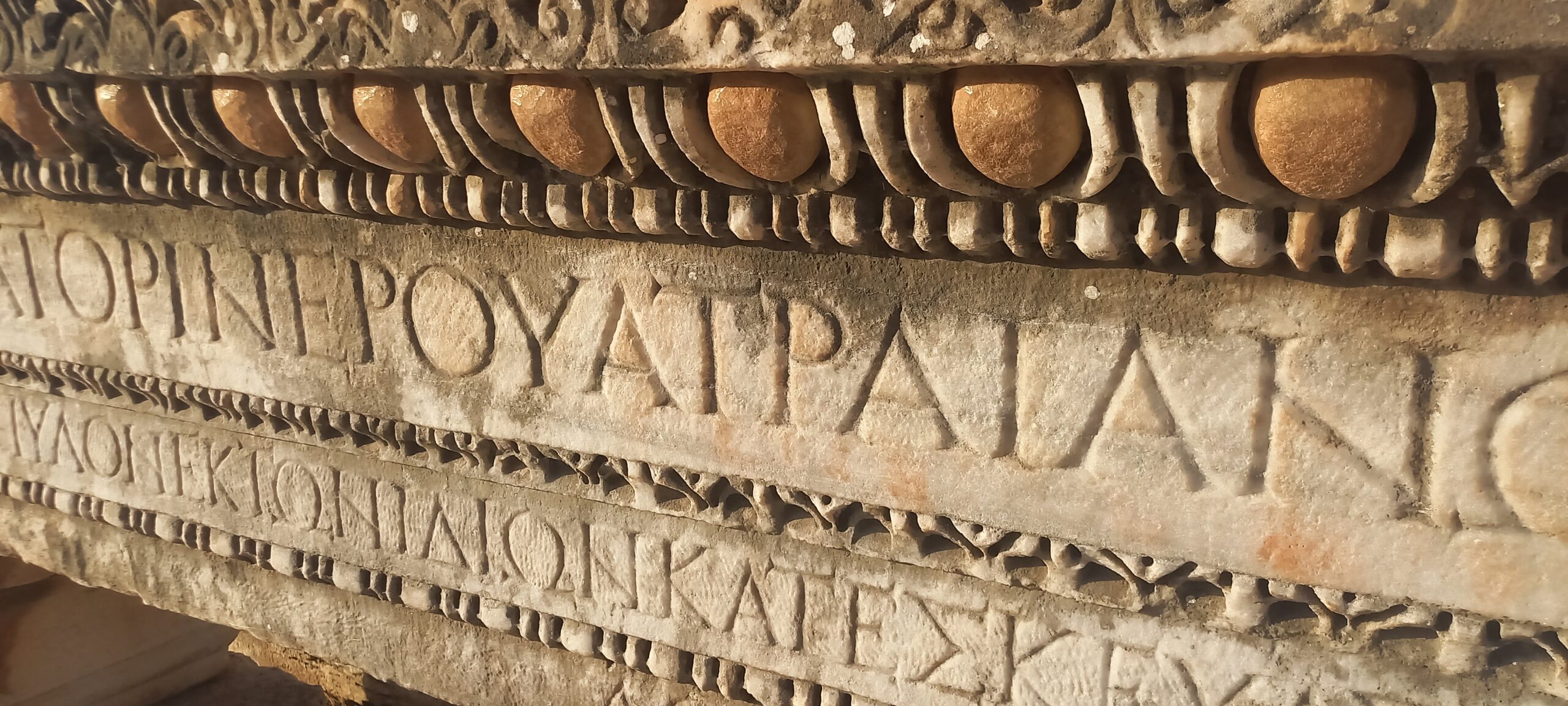
Roaming through the 10th century BC ancient Greek city of Ephesus in the scorching June heat, I reflect upon education today. Ephesus, where vision and ambition manifests itself in the tall columns which stand proudly as a testament to the ingenuity of its architects. Ephesus, where one of history’s great philosophers, Heraclitus, sought to gain an objective perception of reality through the application of logos to the opposing forces of nature. This is sacred ground which has withstood the test of time. This is a place to understand, reflect and appreciate the wisdom we have gained through the toil of our forebearers, whilst we contemplate our own contribution to that great legacy.
A consistent, careful observation of the world around us can open our eyes to the previously unrecognizable immense wealth of knowledge at our doorstep. Heraclitus, guided only by his insatiable desire to understand, had deduced a startling paradox: when opposing elements clash, their search for a middle ground creates balance and harmony. It is this constant interaction of duality melting into unity through good and evil, light and dark, male and female that characterises our perception of reality. Little did Heraclitus know that his ruminations mirrored the yin and yang in the Tao Te Ching thousands of kilometres away in the Far East.

Since then, times have changed inconceivably. The art of concentration has been lost to the distraction of the modern smartphone. The clarity of a young mind is no longer reflected in the crystal-clear waters of a still lake; instead, it is muddied by a flashing screen’s three second only attention span.
Ironically, instantaneous connectivity has disconnected us, unlimited accessibility to information has discombobulated us, and modern education has largely indoctrinated our young people.
I wonder, amidst all these confounding distractions, how can we teach our young generation to manoeuvre discerningly through the world? How can we propel them to be a champion of truth, rather than a slave to apathy?
As I wander towards the Temple of Artemis, I notice a complex and innovative network of aqueducts, an engineering marvel of their time. It was so carefully thought out to ensure equal distribution of water pressure, with filtration systems and storage tanks for the city to thrive in such an arid climate. Both its beauty and functionality are awe inspiring. Who were these pioneers who built one of the most advanced aqueduct systems in the ancient world, aqueducts which are still standing almost 2000 years after the city’s decline? This feat of engineering served the countless Roman baths and saunas through a complex network of heated clay pipes. Unfortunately, overindulgence in superfluity led to the denigration of Roman society, and the creative thinkers and visionaries who understood these concepts of architecture and engineering eventually vanished from the pages of history.

An ancient stone rests invitingly in the shade, urging me to seek reprieve from the scorching heat. Across from me is the great Library of Celsus, once home to 12000 scrolls. Built during the thriving period of Roman rule, this stunning building has become a symbol of modern Turkey. Four sculptures adorn the entrance, and engraved upon them are these words:
Wisdom Intelligence Knowledge Virtue
Supposedly, these were the qualities expected of a high ranking Roman official. However, did those in power truly adhere to these principles? Did they have mentors throughout their formative years who exemplified exceptional character, leaders who persevered through extreme adversity without descending into nihilism?
This brings me back once again to the subject of education.
In today’s volatile world, what can we do better?
It is time to reexamine our priorities, time to return to our foundation. Character is not a quality which can be taught solely in the classroom. Like the young apprentices of Ancient Greece, today’s youth must be given the opportunity to test their boundaries, to be pushed outside their comfort zone, and ultimately embody an expanded, more capable individual.
Fundamentally, they must be open and willing to step into the foreign, the unknown, because this is their invitation to greatness.

Instead of being coddled and spoon-fed, they must assume responsibility. As parents and educators, it is our duty to give them autonomy within boundaries, an environment where they can safely test their limits. In our classrooms, we must teach them not what to think, but how to think. They must be given the opportunity to critically research, debate and ultimately conceive their own unique, informed opinion without fear of censorship.
In today’s politically charged environment, censorship in education is our greatest threat.
Truth and freedom can be intensely fragile. This is part of the reason why I have chosen to visit Turkey and Greece. Athens is the birthplace of Western philosophy and democracy. She has countless lessons to teach us about critical thinking, as well as the importance of open debate and free speech.
Ancient Greece, despite its many flaws, gives us the opportunity to question our own integrity both as a society and as an individual.
The tides are changing. It is time for us to step back and critically examine the greater picture. What is our true history? Are we failing to learn from our past mistakes? Is our current education system serving the highest good? These are questions that only you and I can answer for ourselves. We are the parents, educators and members of the community who are deeply invested in challenging our youth to become the most resilient, self-reliant, vibrant, spiritually grounded, authentic version of themselves.
